
Anarkali Suits
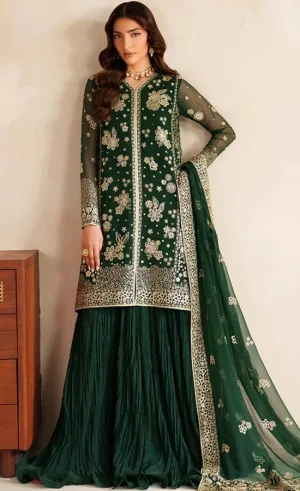
An Anarkali suit is recognised by its long kameez: close-fitting through the bodice, then flaring into a full, skirt-like hem from just below the bust or at the natural waist. It is worn with churidar or straight trousers and a dupatta, and the hem can fall anywhere from mid-calf to the floor. The flare is usually built from joined panels called kalis, so the more panels a design uses, the more it swings when you move. Anarkali suits work for mehndi nights, nikkah and walima functions, and Eid gatherings alike. For other guest silhouettes, browse our Pakistani wedding guest dresses.
Alle 2 Ergebnisse werden angezeigtNach Aktualität sortiert

Alle 2 Ergebnisse werden angezeigtNach Aktualität sortiert
What Makes a Dress an Anarkali
Three details separate an Anarkali from an ordinary long kameez. The waist seam sits high, often just under the bust, so the fitted section is short and the flare starts early. The flare is constructed from many kalis rather than cut as a single piece, which is what gives the hem its depth. And the length is kept long enough for that flare to read as a skirt rather than a shirt.
The name is usually linked to Anarkali, the court dancer of Mughal-era Lahore legend, and the cut is generally traced back to the peshwaz worn at the Mughal and Nawabi courts.
Anarkali, Pishwas, Angrakha or Frock?
These silhouettes are related, and Pakistani product names often use them loosely, so it helps to know what to look for.
- Anarkali: a symmetrical, fitted bodice, a high waist seam and a flare that usually ends between mid-calf and ankle.
- Pishwas: the longer, fuller Pakistani interpretation, usually floor-length and closer to a gown. Choose pishwas dresses if you want the hem to reach the floor.
- Angrakha: the bodice wraps across the body and ties at the side instead of closing symmetrically. See our angrakha dresses.
- Frock: a broader Pakistani term for flared shirts of varying lengths, often without the Anarkali’s pronounced high waist. Browse Pakistani wedding frocks.
Choosing an Anarkali for Each Wedding Function
Length and fabric weight set the occasion more than colour does. A calf-length Anarkali in chiffon or georgette is easy to move and dance in at a mehndi or dholki. For nikkah and walima, a floor-length cut with denser embroidery at the neckline, sleeves and hem looks noticeably more formal.
Fabric also changes the shape. Chiffon, net and organza let the flare float and layer; silk, jamawar and velvet hold the kalis in a fuller, more structured outline, which suits winter weddings.
If you are the bride and want this silhouette for your nikkah, start with our Pakistani bridal dresses, where bridal pieces are made to your measurements.
Sizing an Anarkali Suit
An Anarkali stands or falls on its bodice. If the waist seam lands too low, the flare starts in the wrong place and the dress loses its shape, so check the size chart against your own measurements rather than relying on your usual size. Each product page states whether a piece comes in standard sizes or can be made to your measurements.
If you are between sizes, or want a different sleeve or overall length, ask us on WhatsApp or by email before you order. It is also worth choosing your shoes first: a floor-length hem only falls correctly at the heel height it was cut for.