
Islamic Wedding Dresses
Islamic wedding dresses are bridal outfits designed with modesty in mind: long sleeves, a higher neckline, lined rather than sheer fabric and a silhouette that skims instead of clings, worn with a hijab, veil or dupatta over the hair. This collection brings together modest bridal gowns and South Asian silhouettes such as ghararas, pishwas and lehengas with long shirts, for the nikkah, rukhsati or walima. Bridal pieces are made to your measurements, and coverage can be adjusted before production where technically possible. For the complete bridal range, visit our Pakistani bridal collection.
Ergebnisse 1 – 20 von 170 werden angezeigtNach Aktualität sortiert
-

-
 €899.00
 -
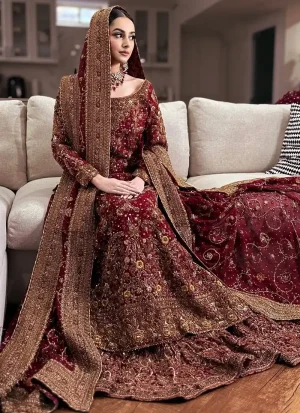 €1,195.00
 -
Ursprünglicher Preis war: €1,439.00€1,079.00Aktueller Preis ist: €1,079.00.
-
€899.00
-
€1,149.00
-
€849.00
-
€999.00
-
€1,199.00
-
€899.00
-
€899.00
-
€799.00
-
€999.00
-
€999.00
-
€899.00
-
€899.00
-
€599.00
-
€949.00
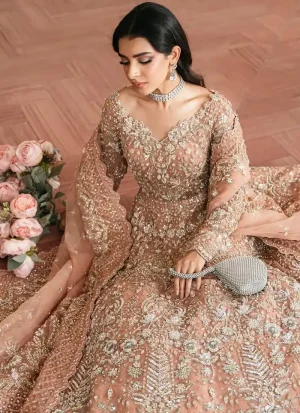


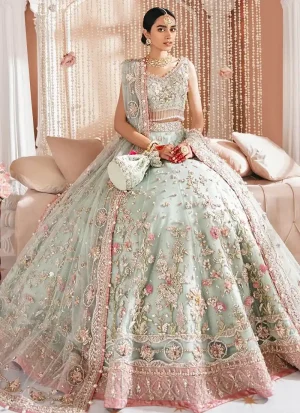


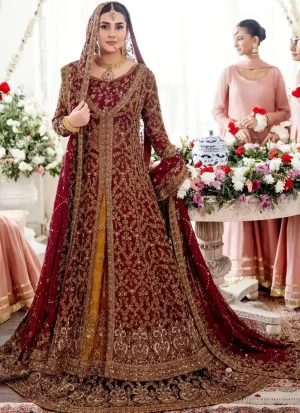
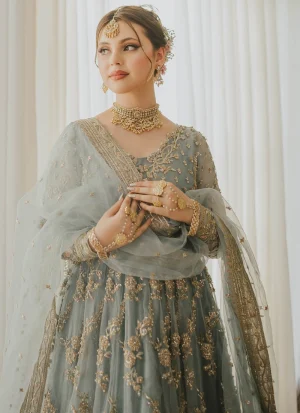
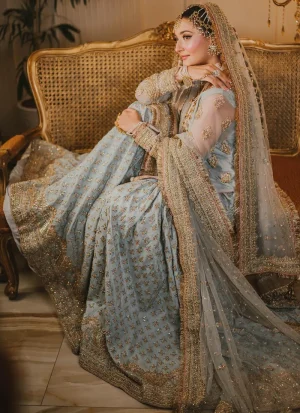
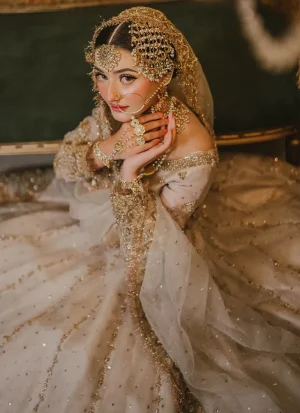


Ergebnisse 1 – 20 von 170 werden angezeigtNach Aktualität sortiert
Modesty Checklist for an Islamic Wedding Dress
Islam does not prescribe a particular wedding garment, and what counts as enough coverage differs between families and traditions. Most brides looking for a modest bridal dress, however, check the same points:
- Sleeves: full length to the wrist, or at least below the elbow.
- Neckline: round, high or boat-shaped, or a deeper cut filled in with an inner layer.
- Fabric: net, organza and chiffon need a lining underneath, so sheer panels are the first thing to look for in product photos.
- Silhouette: a flare from the waist or a straight fall rather than a cut that clings through the hips.
- Back and length: a closed back and a hem that reaches the ankle or floor.
Modest Gowns and South Asian Alternatives
The modest bridal gown, with long sleeves, a high neck and a trail, is the most familiar option, and you will find it among our bridal gowns. South Asian bridal wear offers other routes to the same coverage:
- Gharara with a long kameez: divided trousers under a knee-length shirt, so the silhouette never clings. See our bridal gharara styles.
- Pishwas: a floor-length, fully flared dress that covers from shoulder to floor in one piece. Browse the pishwas collection.
- Lehenga with a long shirt: the Pakistani way of wearing a bridal lehenga, with a kameez or frock over the skirt instead of a short, midriff-baring choli.
Wearing a Hijab or Veil with Your Bridal Outfit
Plan the head covering together with the dress rather than after it. A dupatta in net or chiffon is light enough to pin over a hijab without slipping, and an embroidered border along its edge frames the face in photographs. Many brides wear a fitted hijab underneath in a matching or neutral tone and drape the bridal dupatta on top; others use two dupattas, one over the head and one across the shoulders. A higher neckline sits cleanly beneath a hijab, so a neckline that looks plain on the hanger often works best once everything is on.
Adjusting a Design for More Coverage
If a design is almost right, it can often be adapted. Every bridal order is made to your confirmed measurements, so sleeves, neckline, dupatta and coverage can be changed before production where it is technically possible: lengthening sleeves to the wrist, adding a lining behind sheer panels or raising a neckline, for example. Raise these points before you order, and allow for the production time a bridal order needs. If your nikkah is a separate, smaller ceremony, our lighter nikkah outfits are worth a look for that day.