
Farshi Gharara Dresses for Brides
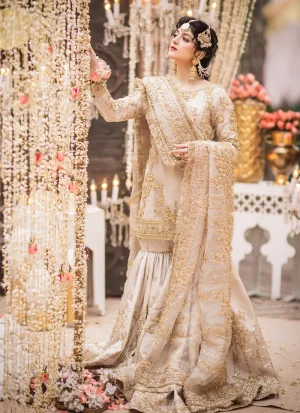
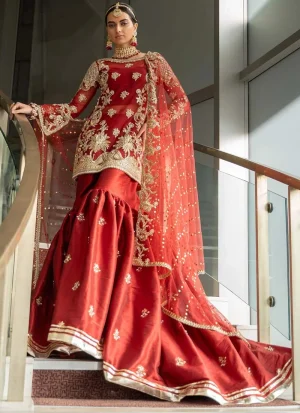
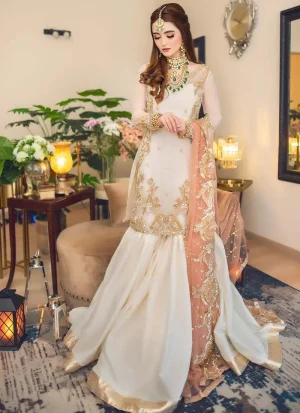
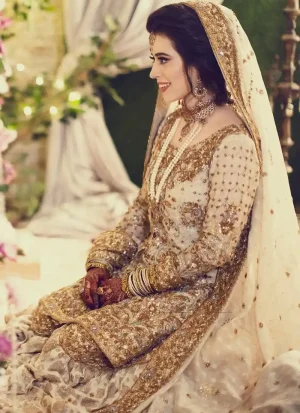
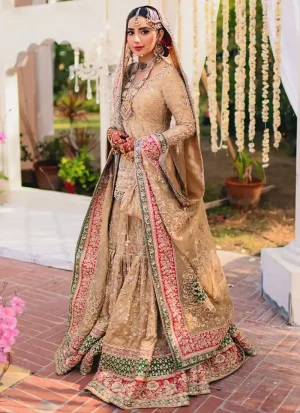
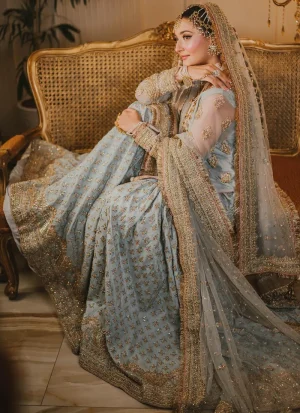
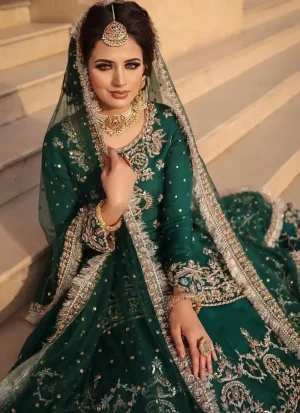
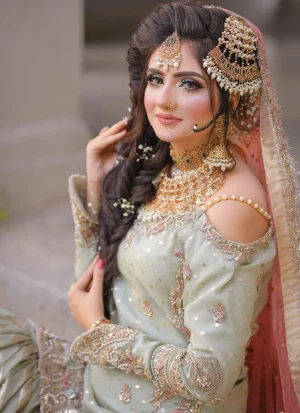
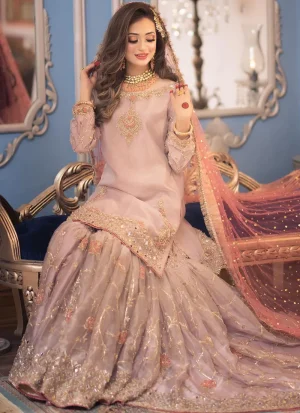
A farshi gharara takes its name from farsh, the floor: its divided legs are cut so long that the fabric spreads over the ground and trails behind the bride as she walks. It is the most formal version of the gharara, worn with a short kameez or kurti and a bridal dupatta, and it suits a slow, ceremonial nikkah, baraat or walima far better than an evening of dancing. Every farshi gharara is made to your measurements, which matters because the length has to be judged precisely. For ghararas that stop at the floor, browse all bridal ghararas.
Ergebnisse 1 – 20 von 22 werden angezeigtNach Aktualität sortiert
-
€899.00
-
 €933.47
 -
-
-
 €899.00
 -
 €999.00
 -
€799.00
-
€799.00
-
€799.00
-
€799.00
-
€499.00
-
€699.00
-
€899.00
-
€499.00
-
€549.00
-
€899.00
-
€799.00
-
€799.00






Ergebnisse 1 – 20 von 22 werden angezeigtNach Aktualität sortiert
From Farshi Pajama to Farshi Gharara
The garment began as the farshi pajama, worn by Muslim women of Awadh and other North Indian courts from roughly the seventeenth century into the twentieth: a flowing, two-legged skirt held by a drawstring, falling straight to the ankle and then spreading across the floor. The name farshi gharara was not used before the mid-twentieth century. Many modern versions combine that floor-length spread with the gharara’s embroidered knee band, so each leg is shaped to the knee, flares, and then pools on the floor.
Walking, Sitting and Posing in a Farshi Gharara
The trail is the whole point of the garment, but it needs a little management. Walking is easiest if you lift the fabric slightly at both sides and take shorter steps. On a stage or sofa, sit first and let someone spread the fabric out in front of you; that is the pose that shows a farshi at its best in photographs. Ask a sister or friend to take charge of the trail each time you move, and avoid long flights of stairs where you can.
Choosing Between a Farshi Gharara and a Farshi Lehenga
Both give the same floor-sweeping effect, and from the front in photographs they can look alike. The difference is in how they move. A farshi gharara is divided, so each leg carries its own flare and the fabric parts as you walk; a farshi lehenga style is a single skirt that moves as one piece and gives a fuller, rounder outline. The gharara reads as the more traditional choice and is closely tied to Muslim bridal dress in Pakistan and North India.
Colours and Functions for a Farshi Gharara
Because it is so formal, a farshi gharara is most often chosen for the ceremony itself. Soft blues, peach, pistachio, ivory and gold are popular for the nikkah, where a lighter palette suits the long, flowing line; our nikkah bridal dresses show other options for that day. Deep reds and maroons keep it classic for the baraat, and champagne or silver suit a walima. The kameez is usually kept short so the trail and the embroidery at the hem get their full effect, and the dupatta is worn over the head for the ceremony. For every other bridal silhouette, see the bridal collection.