
Bridal Gharara
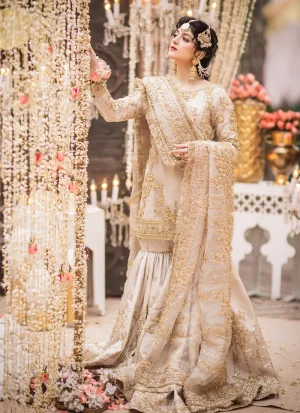
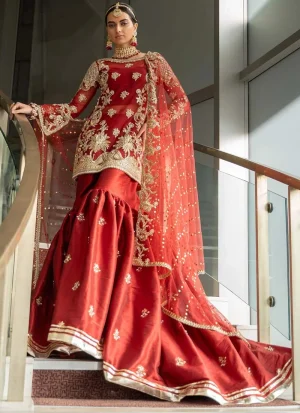
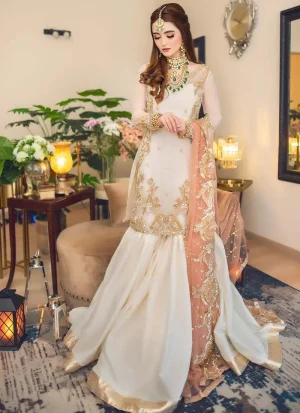
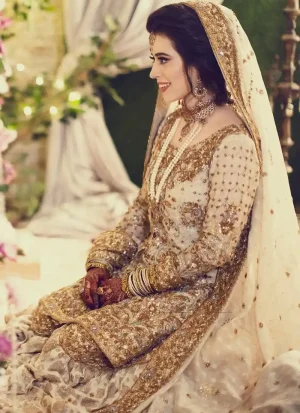
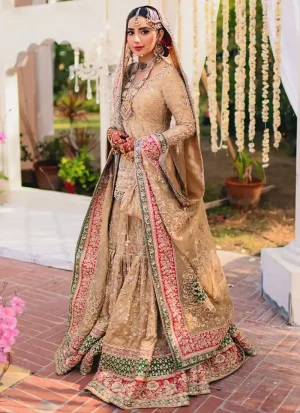
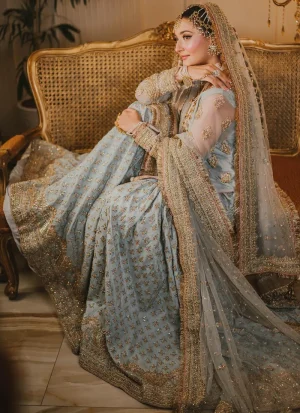
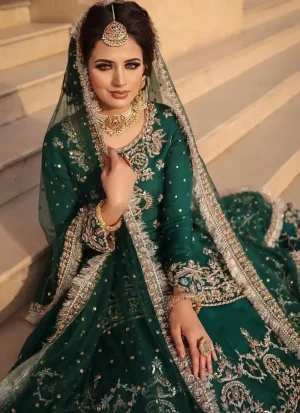
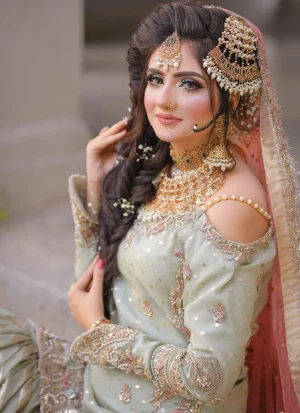
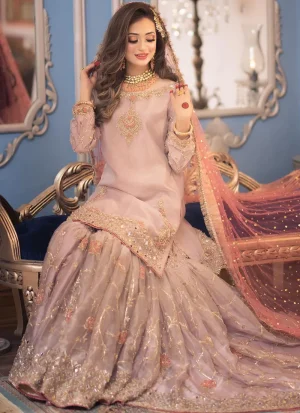
A bridal gharara is fitted from the waist to the knee, where a gathered joint, traditionally covered with a gota or embroidered band, releases the fabric into a full flare that falls to the floor. It is worn with a short kameez or kurti and a bridal dupatta, and remains one of the most traditional silhouettes a Pakistani bride can choose for her nikkah, baraat or walima. Bridal ghararas are made to your measurements. For extra length that pools and trails as you walk, see our farshi gharara styles.
Ergebnisse 1 – 20 von 22 werden angezeigtNach Aktualität sortiert
-
€899.00
-
 €933.47
 -
-
-
 €899.00
 -
 €999.00
 -
€799.00
-
€799.00
-
€799.00
-
€799.00
-
€499.00
-
€699.00
-
€899.00
-
€499.00
-
€549.00
-
€899.00
-
€799.00
-
€799.00






Ergebnisse 1 – 20 von 22 werden angezeigtNach Aktualität sortiert
The Knee Joint: How a Bridal Gharara Is Built
Each leg is made in two parts. The upper section is shaped from waist to knee; at the knee, the lower section is gathered in, traditionally several metres of fabric per leg, and joined with a band that hides the seam. On a bridal gharara that band usually carries the richest work, whether gota, zari or zardozi, and the same work is often echoed at the hem. The kameez is traditionally kept short so the knee joint stays on show.
The silhouette comes from the Nawabi courts of Awadh, around Lucknow, and travelled with the families who migrated to Pakistan after 1947, particularly to Karachi. That history is why it remains so closely tied to Muslim bridal tradition in Pakistan.
Telling a Bridal Gharara from a Sharara
Look at the knee. A sharara flares from the waist in one continuous line with no joint, while a gharara stays close to the leg until the knee and then breaks into its flare. The sharara is lighter and moves more freely, which suits mehndi and less formal functions; the gharara is more structured and formal, which is why brides so often choose it for the main events. Compare the lighter cut in our sharara suits, or browse gharara dresses for mothers, sisters and wedding guests.
Farshi Ghararas and Colour by Function
Farshi comes from farsh, meaning floor. A farshi gharara is cut long enough to pool and trail behind you, adding a sweep of fabric with every step. It remains a divided garment, which is what separates it from a farshi lehenga, where the same floor-length trail comes from a skirt.
Colour usually follows the function. Deep reds and maroons are still the classic baraat choice, while ivory, gold, pastels and soft blues are common for the nikkah and walima. For lehengas, gowns and other bridal silhouettes, return to our Pakistani bridal dresses.
Measurements and Timing for a Bridal Gharara
Fit matters more on a gharara than on a lehenga because the knee joint has to land in the right place: too high and it loses the fitted line that defines a gharara, too low and it restricts your stride. Accurate leg measurements, taken with the heel height you plan to wear in mind, make the difference. Bridal pieces are made to your confirmed measurements, and changes to colour, embroidery, sleeves, neckline and dupatta can be discussed before production. Detailed embroidery takes production time, so contact us early once your wedding date is set.
On the day, a full gharara needs a small lift at the knee on stairs, so it is worth practising in your shoes beforehand.