
Pakistani Bridal Gowns
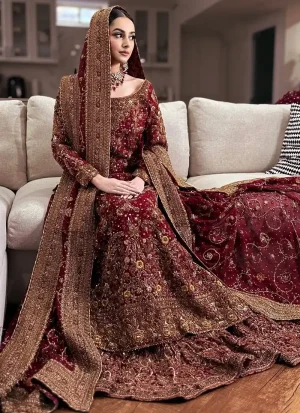
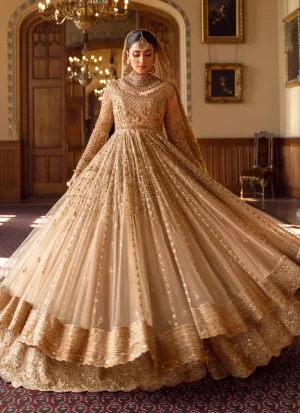
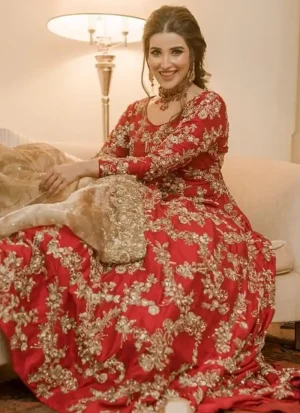
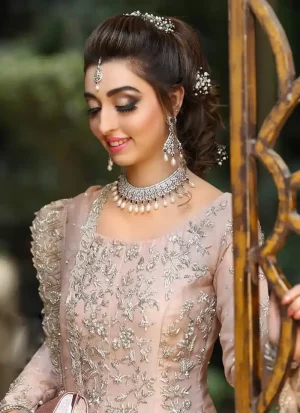
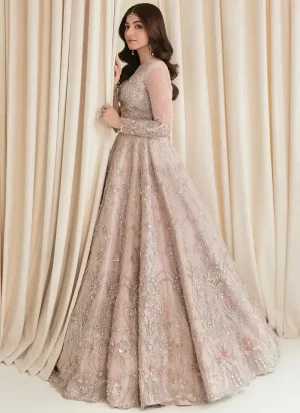
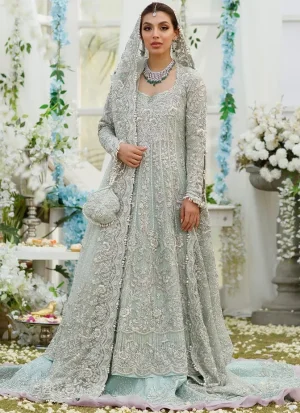
A Pakistani bridal gown is a floor-length bridal dress built around a gown silhouette and finished the Pakistani way: dense handwork such as dabka, zardozi, tilla or pearls, a full skirt that often ends in a trail, and a bridal dupatta in place of a Western veil. Many are cut as one-piece flared gowns with a fitted bodice; others open at the front to show a lehenga or trousers beneath. Ivory, silver, peach and pastels are popular for the nikkah and walima, deeper maroons for the baraat. Every gown is made to your measurements. For lehengas, ghararas and other silhouettes, visit our Pakistani bridal dresses hub.
Ergebnisse 1 – 20 von 34 werden angezeigtNach Aktualität sortiert
-

-
 €899.00
 -
 €1,195.00
 -
€899.00
-
€1,199.00
-
€899.00
-
€999.00
-
€899.00
-
-
 €999.00
 -
€599.00
-
-
-
€1,042.00
-
€899.00
-
€999.00
-
€849.00
-
€849.00
-
€999.00




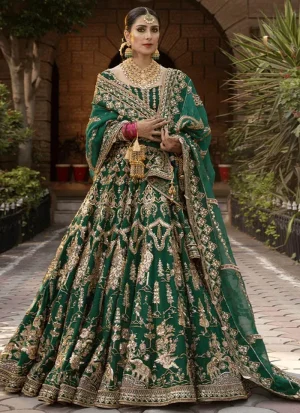
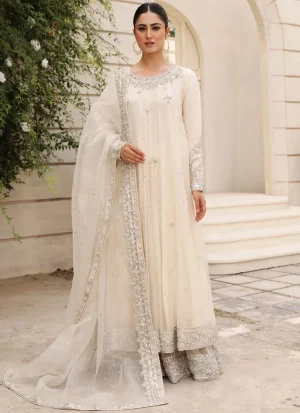
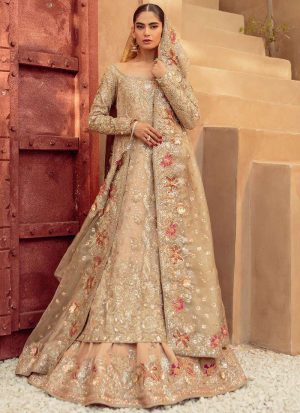
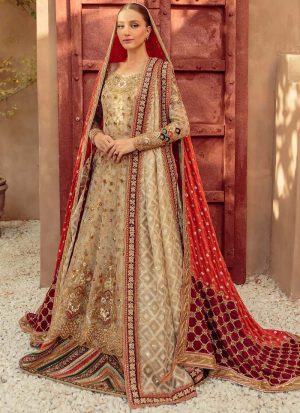


Ergebnisse 1 – 20 von 34 werden angezeigtNach Aktualität sortiert
What Makes a Bridal Gown Pakistani
The silhouette may come from Western bridal wear, but three things give it away. The embellishment is South Asian handwork rather than lace or beading alone, and it usually covers the bodice, the sleeves and the hem. The gown is worn with a dupatta, sometimes with a second one over the head for the ceremony. And coverage tends to be fuller, with sleeves to the elbow or wrist and a higher neckline, even on gowns not designed specifically as modest wear. For an openly fused look with capes or drapes, see our Indo-Western gowns.
Trail Gowns, Open-Front Gowns and Maxi Gowns
- Trail gown: a full skirt that extends into a floor-sweeping train, the most dramatic version, sometimes called a farshi gown.
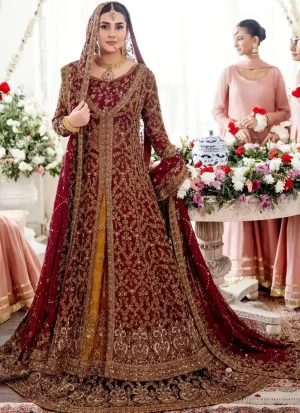
- Open-front gown: a gown or long frock that parts from the waist to show an embroidered lehenga, sharara or trousers underneath, so two layers of work are on display.
- Maxi gown: a simpler, floor-length flared cut without a long train, easier to wear for a smaller nikkah; compare our Pakistani maxi styles.
Every other gown shape, from mermaid to modest, is gathered under bridal gowns.
Choosing a Gown Colour for the Nikkah, Baraat or Walima
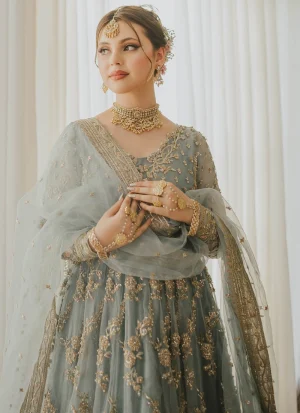
Pakistani bridal gowns are especially popular for the nikkah, where ivory, silver-grey, peach, blush and soft blue suit a daytime ceremony and pair well with silver or pearl work; our nikkah dress collection shows more of that palette. For the baraat, a maroon or deep red gown with a trail keeps the traditional colour while offering an alternative to the lehenga. For the walima, champagne, silver and pastel gowns with a lighter dupatta give the second day a softer finish.
Wearing a Dupatta with a Bridal Gown
Because a gown has no separate top, the dupatta does the framing. For the ceremony it usually goes over the head and falls over both shoulders, pinned at the crown so it stays in place when you sit. For photographs and the evening it can move to a single shoulder or drape over the forearms, which shows off the bodice and the back of the gown. Choose a dupatta border that echoes the gown’s hem work, and keep the dupatta light if the gown itself is heavily embellished.