
Bridal Pishwas Dresses for Young Desi Brides
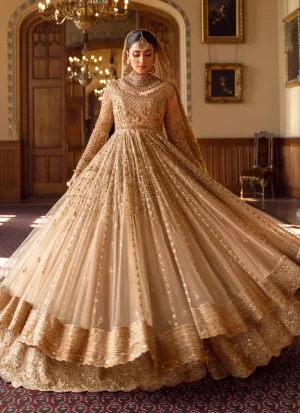
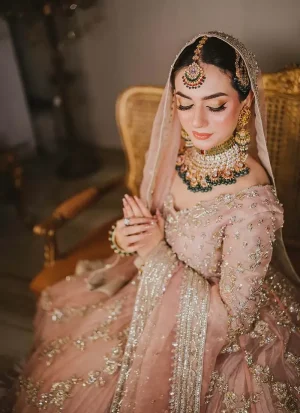
Shop bridal pishwas dresses for your mehndi, nikkah, baraat or walima. Our Pakistani bridal pishwas collection (also spelled peshwas or peshwaz) is for brides who want a floor-length dress with real flare, whether that means a light, swirling design to dance in at the mehndi or heavier embroidery for the nikkah. Open any pishwas dress to check its fabric, size chart and whether it can be made to your measurements. Then message us on WhatsApp with your wedding date to order or ask a question. For other bridal silhouettes, browse our full Pakistani bridal dresses range.
Alle 6 Ergebnisse werden angezeigtNach Aktualität sortiert
-
€899.00
-

-
-
-
€799.00


Alle 6 Ergebnisse werden angezeigtNach Aktualität sortiert
What Is a Pishwas Dress?
A pishwas is a floor-length dress with a fitted bodice that opens into a full, swinging skirt built from many panels. It is the Pakistani name for the longest, fullest form of the kalidar silhouette, and it is worn over churidar or straight trousers with a dupatta. In Indian bridal wear, you will often see the same shape sold as a floor-length Anarkali or Anarkali gown.
From the Mughal Peshwaz to the Modern Bridal Pishwas
The peshwaz was a gown worn by women at the Mughal and Nawabi courts. It had a fitted bodice and a long, flared skirt, often in fine muslin with zari borders, and it was tied at the waist and worn over trousers. It is generally regarded as the ancestor of today’s Anarkali. Pakistani designers have kept the fitted top and the floor length but multiplied the panels. Some contemporary bridal designs use twenty or more panels for a very wide hem.
How a Pishwas Differs from a Maxi or Gown
All three reach the floor, so the difference is in the cut. In Pakistani retail, „maxi“ is the broad term for any floor-length dress. A pishwas is a particular kind of maxi, built from panels below a fitted bodice so that it swirls out when you turn. A gown usually borrows from Western eveningwear, with a smoother, less gathered skirt and sometimes a trail. If you like the pishwas shape but want it shorter for a dholki, an Anarkali suit ends between mid-calf and ankle. For simpler floor-length cuts, compare our plainer floor-length maxis.
Bridal Pishwas Styles: Kalidar, Angrakha and Farshi
- Kalidar: the classic version, with the panels starting at a high waist seam for the most swing.
- Angrakha-style: the bodice wraps and ties at the side instead of closing at the centre, as on our angrakha dresses.
- Farshi: cut long enough to pool on the floor. This is the most formal and dramatic version, and it suits the nikkah, baraat or walima better than a mehndi where you will be dancing.
Choosing a Bridal Pishwas for Each Wedding Function
- Mayun and mehndi: yellow, green and other bright colours are traditional. Chiffon or lightweight organza keeps a wide flare light enough to dance in, and gota or thread embroidery adds colour without much weight.
- Nikkah: the pishwas is a popular nikkah choice. Net or organza with denser work on the bodice and hem looks formal, and a farshi length adds presence in photographs.
- Baraat: red and deep maroon remain the traditional colours, and this is the event for the heaviest embroidery. A heavily worked farshi pishwas in silk, net or jamawar is a dramatic alternative to a lehenga or gharara.
- Walima: softer pastels, champagne, silver and gold tones are common, and the gown-like line of a pishwas suits the more elegant evening mood.
Fit, Sizing and Ordering
So much fabric hangs from the bodice that it has to fit closely to carry the skirt. Compare the size chart with your bust and waist measurements. If a design is made to measure, take the length measurement in the shoes you will wear on the day. Each product page shows whether that design comes in standard sizes or is cut to your measurements. Delivery times and costs are listed on our delivery information page. Message us on WhatsApp with your wedding date before ordering so the timing can be checked.